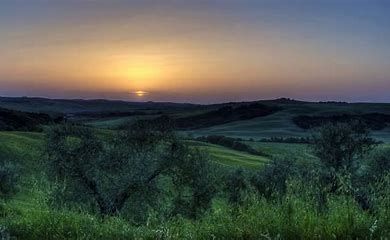
Evening and Morning
Notice that He does not say, “Darkness and Light was the first day.” Nor yet does He say, “Night and Day was the first day.”
The Day above the waters above the firmament, is not a solar day, neither the night above the waters upon the firmament is a shadow of a solar day. You first need to separate the two as we have done elsewhere.
“Day” strictly means light. And It is not reckoned in hours, time, duration, etc. There is no evening about it, there is no morning about it. It is just day. Yes, the light was called Day. Not some twenty-fours hours period which consists of a solar day and a solar night; yes, not some twelve hours, but a presence that manifests every object in it. It is a uniform presence of brightness that covers part of that great sphere above the firmament.
Again, strictly speaking, Evening is a night watch and Morning is equally a night watch!
Mark 13:35 KJV
Watch ye therefore: for ye know not when the master of the house cometh, at even, or at midnight, or at the cockcrowing, or in the morning:
Notice that the night is divided into four watches, Even, midnight, cock-crowing, or morning, all are night watches. No light there, no day there!
Thus, the “Evening and Morning” Spans from the first watch of the night to the last watch of the night. It is the whole extend of the Night! It is a period of darkness all through.
Then you ask me, “Why then was it called the first day, second day, etc.”
But I also ask you, “Can light be counted?” Can you count a presence that makes brightness? Unaweza hesabu “Nuru”? Nuru ya kwanza, ya pili… It makes no sense. There is only one true light, and it remains singular. God is light, and He remains singular. So, was the light of Genesis 1:3-5. A brightness that can’t be counted.
Then you wonder, what did the scripture means by the “first day, second day…”
That is the English language problem! Kiswahili calls it “Siku” –day– from “Usiku” –Night– thus, Jioni na alfajiri pamoja vilifanya siku ya kwanza… Usiku wa kwanza! The first night! Just hold your reins please, we will get to the bottom of this confusion and you will see it!
To reinforce this truth, it is obvious that God was working during the Day, when light is on, and watching during the night.
Genesis 1:5,7-8,11-13 KJV
And God called the light Day, and the darkness he called Night. And the evening and the morning were the first day. [Period]
And God made the firmament, and divided the waters which were under the firmament from the waters which were above the firmament: and it was so. And God called the firmament Heaven. And the evening and the morning were the second day. [Period]
And God said, Let the earth bring forth grass, the herb yielding seed, and the fruit tree yielding fruit after his kind, whose seed is in itself, upon the earth: and it was so. And the earth brought forth grass, and herb yielding seed after his kind, and the tree yielding fruit, whose seed was in itself, after his kind: and God saw that it was good. [13] And the evening and the morning were the third day. [Period]
See??? After making the light, and dividing the light from darkness, which took the whole day, period of light, then He rested, watching from evening to morning, before starting once again. You don’t work during night! Usiku (night), siku (day?). What the world calls day is altogether night! Hold your reins please! We aren’t there yet!
Then God made the firmament during the whole second day, the period of light, then by the end of the day, the evening came on (start of night), and went on through the midnight through the morning watch (between 5am and 6am). Thus, “the evening and the morning was the second night… (day…? Siku…!!! Siku ya pili! Sio mchana wa pili. Mchana hauwezi hesabika… Mchana ni mchana tu, hakuna mchana wa pili, wa tatu na katalika. It is night which was being counted as a period, a gap, an interval of darkness. Usiku wa kwanza, wa pili, wa tatu, nk. You can’t count the light or the presence of light.
 Echoes From Paradise